What Happens to Your Ballot After You Leave the Poll Site in New York City
Your ballot goes into bipartisan custody, the mail votes are processed as they arrive, Tuesday night's numbers are unofficial by design — and days later, the city recounts a sample of its own machines by hand to check them.
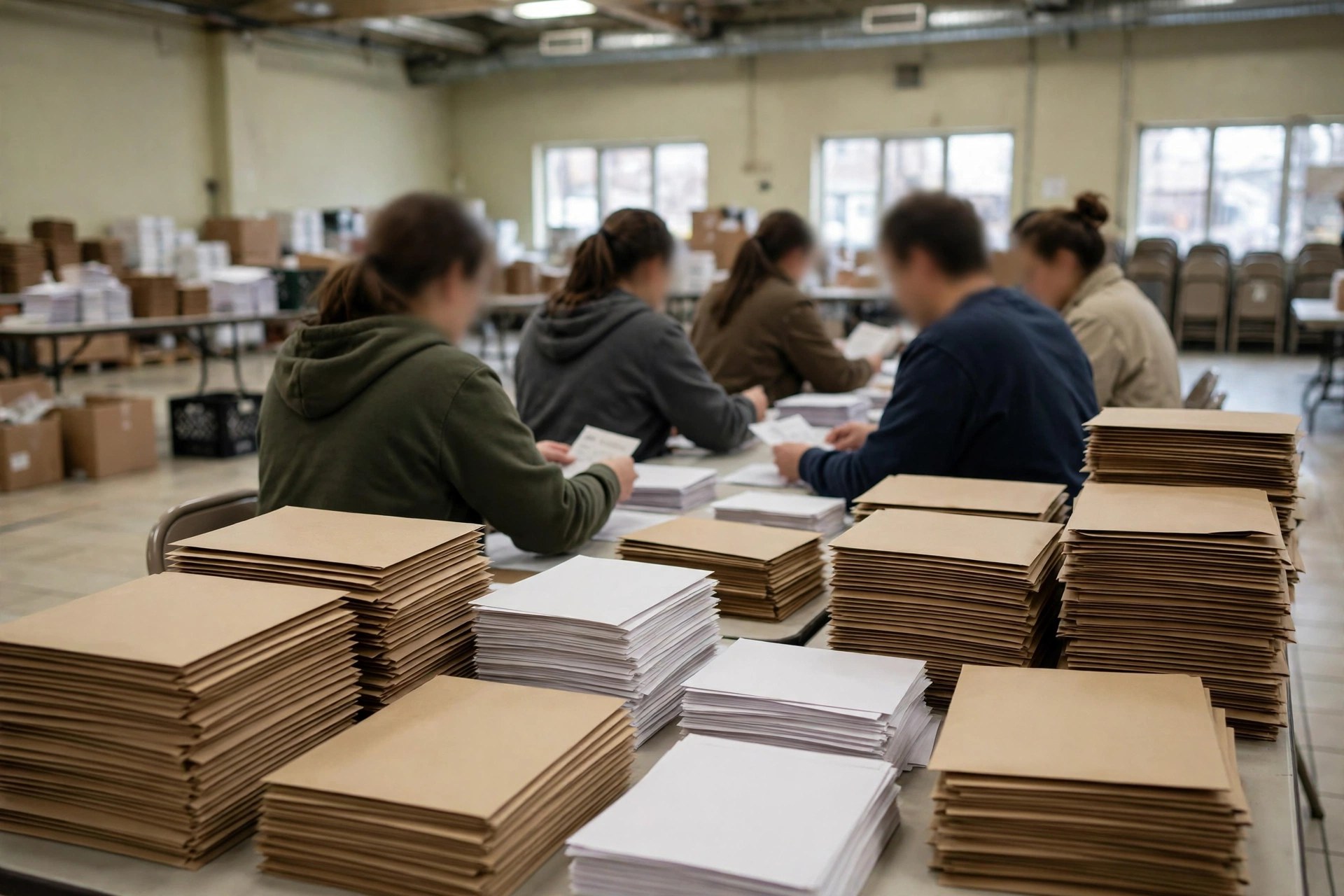
The moment you leave the poll site, your ballot changes hands — into a structure built to be watched by both parties at once. The New York City Board of Elections, which takes custody of every ballot in the five boroughs, has 10 commissioners: two from each borough, one Democrat and one Republican, with the staff beneath them split the same way, according to the board's own reporting as laid out in an election-process explainer published Sunday and read by this desk.
Mail ballots do not wait in a pile for Tuesday night. New York changed its law several years ago so boards can process mail ballots as they arrive, and the state's highest court upheld that law in 2024. A mail ballot postmarked by Election Day can arrive days later, under the Board's published deadline, and still count. That is the first reason the numbers move after election night: the count is not finished when the polls close, and it is not supposed to be.
So read Tuesday night's figures the way the Board does: as unofficial. The numbers published that night combine early votes, Election Day votes and the mail ballots that came in by the end of early voting. Over the following days, the Board counts the valid mail ballots that arrive after Election Day, together with affidavit ballots — the ones voters cast at a poll site when a problem comes up, such as a name missing from the book. Some totals will shift, not because anything went wrong, but because every valid vote is still being counted.
Then the city checks its own work. Within days of the election, the Board randomly selects 3 percent of its voting machines, and a bipartisan team compares the paper ballots against what those machines reported, under the state election law provision the explainer cites. If the numbers do not match, the check expands to more machines — and it can go all the way to a full hand count of the paper. It is a quieter process than election night and a slower one. It is also the part that makes the final numbers final.