How Tuesday Night's Winners Get Called: 4,000 AP Reporters, Two Vote Counters and a Rule That Has Held Since 1848
When a winner flashes on a screen Tuesday night, it will not come from the candidates or the campaigns. It will come from a count the Associated Press has run since 1848 — and a call it makes only when the loser cannot catch up.
On Tuesday night, New Yorkers will learn who governs them from a sentence that begins with a news organization's name, not a government's. That is by design. The United States has no national election-night announcer; the counting is done by election officials over days, and the calling — the projection that a race is decided — is done by news organizations working from vote totals gathered county by county. A Reuters explainer published Sunday lays out how that machinery will run for the 2026 midterms.
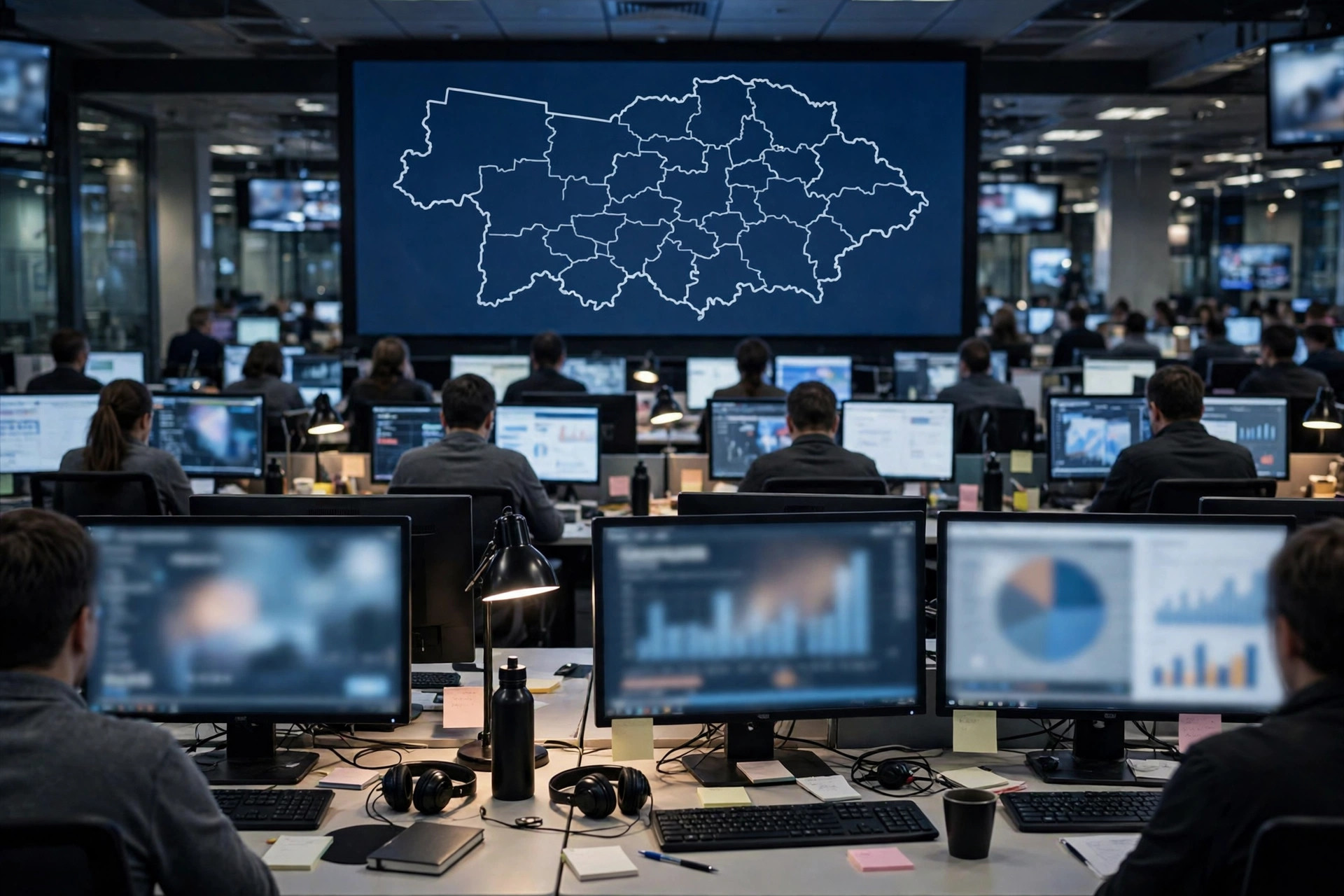
Most television networks and digital outlets will rely on one of two vote counters: the Associated Press, or the election-data firm Decision Desk HQ. The AP has counted votes in every American election since 1848 and says it will deploy more than 4,000 reporters at county election offices and polling locations on Tuesday. Outlets differ in what they build on top of the count — Fox News and CBS News make their own projections using the AP vote count, exit polls, early-vote totals and their own statistical modeling, while MS NOW will rely solely on the AP for race calls, and the New York Times uses AP calls for most contests while independently reviewing competitive ones.
The discipline inside the call is the part worth knowing. The AP calls a race only when the trailing candidate cannot catch up: its analysts take the votes reported by election officials, estimate how many ballots remain uncounted from past voting patterns and early-vote totals, and wait until the math closes. The first calls of the night can come soon after polls close in Indiana and Kentucky at 6 p.m. Eastern, with Georgia, South Carolina, Vermont and Virginia following at 7 — hours before New York's polls close at 9 p.m., when anyone already in line can still vote.
For New York's own races — governor, Congress, Albany — the sequence means the national picture may be taking shape before the city's returns even begin. It also means the word 'called' should be read precisely on Tuesday night: it is a statistical judgment by a newsroom, sometimes reversed in principle and almost never in practice, and it is not the certified result, which arrives on paper, from the Board of Elections, weeks later. Both things will be true at once, all night.